Ever get hopelessly lost, squinting at a paper map while your friends impatiently tap their feet? Those days are almost over, thanks to gps navigation receivers. Think of them as your personal electronic tour guides, constantly pinpointing your location and guiding you to your destination. This guide will explore how these ingenious devices work, their various types, and what to consider when choosing the right one for your needs. You’ll gain a solid grasp of the technology, boosting your confidence in using it, and improving your ability to make informed decisions. Expect to feel empowered and knowledgeable about gps navigation receivers.
Key Takeaways
- Learn the fundamental principles behind how gps navigation receivers function using satellite signals.
- Explore the various types of gps navigation receivers, from handheld devices to built-in car systems.
- Understand the features and functionalities to consider when selecting a receiver.
- Discover real-world applications and explore how people use this technology daily.
- Gain insight into common myths and misconceptions about gps technology.
- Become familiar with troubleshooting tips and maintenance practices for your receiver.
How GPS Navigation Receivers Function
At the core of a gps navigation receiver’s operation is a fascinating interplay of satellites and radio signals. These devices don’t just magically “know” where you are; they cleverly compute their position based on signals received from a network of satellites orbiting Earth. This system is crucial for a wide array of activities, from simple travel to search and rescue operations. Without a proper understanding of how the system functions, the user cannot appreciate its benefits to the fullest extent.
The GPS Satellite Constellation
The United States Department of Defense manages the Global Positioning System (GPS), which comprises a network of approximately 30 satellites. These satellites are positioned in orbit around Earth, ensuring that at any point on the planet, at least four satellites are “visible” to a gps navigation receiver. This visibility is essential, as the receiver needs to receive signals from a minimum of four satellites to calculate its precise location.
- Satellite Orbits: Each satellite circles the Earth twice a day. The orbits are precisely designed to provide comprehensive coverage.
- Signal Transmission: Satellites transmit radio signals containing information about their precise location and the current time.
- Signal Accuracy: Atomic clocks on each satellite ensure precise timing for accurate positioning.
Satellites travel in medium Earth orbit (MEO) with an altitude of roughly 20,200 kilometers (12,500 miles). This height ensures the satellites are not too far away, which would weaken signals. Their orbital planes are specifically arranged to provide the best signal availability and global coverage. Their movements are constantly monitored and corrected from the ground to maintain orbital accuracy. This precise orbital control is vital to the performance of gps navigation receivers, as the distances calculated are dependent on the satellite’s exact position.
These radio signals travel at the speed of light to reach gps navigation receivers. Each satellite sends two main types of signals: the L1 and L2 frequencies. The L1 signal is used by civilian devices, while the L2 frequency is mainly reserved for military use. The signal carries data about the satellite’s location and an extremely accurate atomic clock time that is synchronized with the GPS system. The timing information is crucial for location calculation. This system allows the receiver to determine how far away each satellite is.
The satellites are equipped with highly accurate atomic clocks. This ensures the precise timing needed for calculating distances. These atomic clocks are continuously synchronized with a network of ground stations to maintain perfect accuracy. Variations in time directly translate to positional errors, so maintaining accuracy is essential. Even a tiny timing difference can significantly affect the calculated position, so the entire system is designed for meticulous timekeeping. Without such precise timing, accurate location is impossible.
Receiving and Processing Signals
The gps navigation receiver acts as a sophisticated translator, transforming the signals received from the satellites into useful location data. It’s like having a radio that not only picks up signals but also processes them to reveal its own coordinates. The process involves several steps, from acquiring the signal to calculating the receiver’s precise location on Earth.
- Signal Acquisition: The receiver first searches for and “locks onto” signals from multiple satellites.
- Distance Calculation: The receiver measures the time it takes for signals to travel from each satellite.
- Location Calculation: Using trilateration, the receiver calculates its position based on signals from at least four satellites.
The receiver’s antenna is designed to pick up these signals from space. Initially, the receiver will “search” the skies, scanning for the signals broadcast by the GPS satellites. Once signals are detected, the receiver “locks onto” the signal. The receiver is capable of tracking multiple satellites simultaneously, creating a more reliable location reading. This process initiates the connection between the receiver and the GPS system. The more satellites it can connect to, the more accurate the location data.
By measuring the time it takes for a signal to arrive from each satellite, the receiver can determine the distance. This is done by comparing the time the signal was sent by the satellite with the time it was received by the gps navigation receiver. Since the signal travels at the speed of light, any time difference corresponds to a distance. These distances are the data used to calculate position. The receiver now has the information it needs to perform complex calculations.
Trilateration is the core concept that gps navigation receivers use to determine their location. This geometrical method uses the distances measured from the satellites as radii to create spheres. The point where those spheres intersect is the location of the receiver. Because of the Earth’s shape, three satellites are theoretically needed, but four are generally used to account for timing errors. Additional satellites improve accuracy. With the right amount of information, the receiver pinpoint your location accurately.
Factors Affecting GPS Accuracy
While gps navigation receivers are remarkably accurate, several factors can affect their performance. These factors can introduce errors into the calculations, leading to slight inaccuracies. It’s helpful to be aware of these external influences to better manage expectations.
- Atmospheric Conditions: The ionosphere and troposphere can slow down the radio signals.
- Satellite Geometry: The position of the satellites relative to the receiver can impact accuracy.
- Signal Obstructions: Buildings, trees, and other obstructions can block or reflect signals.
As radio signals travel through Earth’s atmosphere, they encounter varying densities of charged particles and molecules. This causes a delay in the signals. The ionosphere, a layer of electrically charged particles, and the troposphere, the lowest part of the atmosphere, are the main sources of interference. This can introduce errors in distance calculations. Modern receivers use sophisticated models to correct for these atmospheric effects and improve accuracy.
The ideal scenario is to have satellites spread across the sky. Poor satellite geometry, or having satellites clustered together in the sky, can worsen accuracy. When satellites are in unfavorable positions, the calculated position becomes less precise. This is known as “geometric dilution of precision” (GDOP), where a higher GDOP value indicates poorer accuracy. The best accuracy is usually achieved when satellites are evenly spaced, which ensures signals are received from multiple directions.
Signals from satellites are radio waves that can be blocked or reflected by objects. Large buildings, dense forests, and even mountains can obstruct the direct path of signals. These obstructions can weaken the signal strength or introduce multipath errors, where the signals bounce off objects before reaching the receiver. This can lead to a less accurate location calculation. Open spaces and a clear view of the sky ensure the best performance from a gps navigation receiver.
Types of GPS Navigation Receivers
There are numerous types of gps navigation receivers, each designed for specific purposes and environments. From everyday consumer gadgets to specialized instruments, the design and features are customized for how and where they will be used. This diversity allows users to select the best type for their needs.
Handheld GPS Receivers
These are the classics, portable devices designed for outdoor activities like hiking and boating. Their size, durability, and features are tailored for outdoor use. They are commonly used by hikers, campers, and outdoor enthusiasts to track their progress.
- Design: Usually compact, rugged, and water-resistant.
- Features: Offer mapping, route planning, and often include a compass and altimeter.
- Battery Life: Powered by batteries, providing portability for extended use.
Handheld receivers are engineered to withstand the rigors of outdoor use. They typically have a robust, weather-resistant casing. This design enables them to endure exposure to the elements, such as rain, dust, and accidental drops. They are built for portability. With their portable design and durability, they are perfect for navigating challenging terrain.
Most models include basic mapping capabilities to show topographic details and points of interest. Route planning is another important feature, with the user able to create and follow routes for their journeys. Digital compasses are added to provide directional data. Additional features include an altimeter to monitor elevation changes. These features are very helpful for providing accurate location data.
They are powered by standard batteries. The battery life can range from several hours to a few days. The lifespan is impacted by screen brightness and active features. Users can swap out batteries or carry spare ones to ensure prolonged use in the field. This functionality is crucial for outdoor adventures. This allows for a great deal of flexibility during adventures.
Automotive GPS Receivers
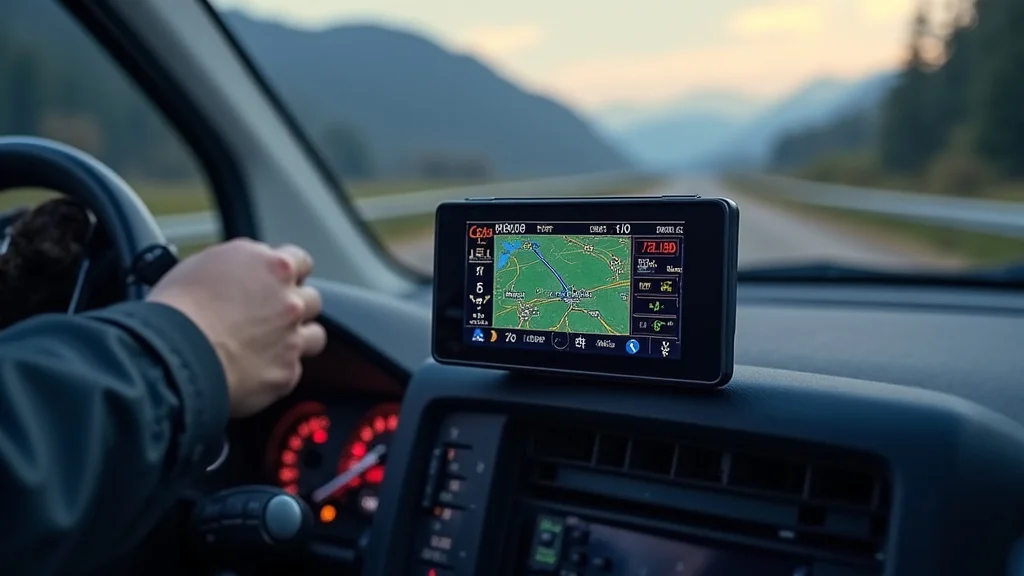
The most common type, these receivers are found in cars and trucks, providing turn-by-turn directions. They’re designed for easy use in vehicles. The goal is easy navigation for drivers.
- Design: Integrated into the car’s dashboard or as standalone devices mounted on the windshield.
- Features: Provide real-time traffic updates, voice guidance, and integration with car audio systems.
- Connectivity: Often connected to a power source and antenna for continuous operation.
They are available as built-in systems or as aftermarket options. Integrated systems are a part of the vehicle’s infotainment system. Standalone units come with a mounting system and a display screen. These models are built to provide a great deal of ease for drivers. These devices are designed for a convenient view and easy access for the driver.
Automotive gps navigation receivers give turn-by-turn directions. Many systems offer real-time traffic data, alerting drivers to congestion or incidents along their route. Voice guidance speaks instructions, ensuring the driver’s eyes stay on the road. The units are also designed to connect to the vehicle’s audio system. These features make driving safer and more convenient.
They typically connect to the car’s electrical system. This guarantees continuous power and avoids battery changes. Some models use an external antenna, helping to improve signal reception. These systems are crafted for smooth integration into a car’s operations.
Marine GPS Receivers
These are made for use on boats and ships, with features suited to the marine environment. They help in positioning, planning routes, and avoiding hazards while on the water. These are purpose-built for marine applications.
- Design: Waterproof and designed to withstand the marine environment.
- Features: Provide charting, depth sounders, and interfaces for other marine electronics.
- Antenna: External antennas for the best possible signal reception at sea.
Marine gps navigation receivers are designed to withstand exposure to water and the elements. They are often built with rugged, waterproof casings. Their durable construction makes them great for a marine environment, protecting them from splashes, waves, and spray. This is essential for safe operation on the water.
The marine receivers offer charting capabilities. They also have interfaces that connect with other marine electronics such as depth finders. These receivers also show information like speed, heading, and current location. These features are helpful for coastal navigation and help boaters stay safe.
Because signal reception can be difficult at sea, external antennas are used to boost signals. The external antennas improve the accuracy of position data. They are placed to get the most accurate location. This is important for boaters because it gives them essential navigation details.
Choosing the Right GPS Navigation Receiver
Selecting the right gps navigation receiver requires consideration of your specific needs and the environment in which you’ll be using it. Considering all options will let you choose the best receiver.
Factors to Consider
- Intended Use: Determine how and where you will use the receiver.
- Features: Decide which features are most important to you.
- Accuracy and Sensitivity: Look for receivers with high accuracy and good signal sensitivity.
Start by considering how you intend to use the receiver. For example, if you need a receiver for hiking, a rugged handheld device with mapping features would be a good choice. For driving, an automotive gps navigation receiver would be better, with real-time traffic and voice guidance. Consider the type of activities. Choosing the proper receiver will help you have a better experience.
Consider key features. Do you need detailed maps, route planning capabilities, and compass functionality? Or do you need traffic updates, voice guidance, and integration with other systems? Make sure that the features you need will be included with your receiver. Choosing the right features is important for ensuring the device is effective.
Accuracy is a key consideration. Some receivers use advanced technology like WAAS (Wide Area Augmentation System) to enhance accuracy. Pay attention to signal sensitivity. A receiver with good sensitivity will work better in challenging environments. The receiver’s ability to maintain a strong signal impacts the receiver’s utility.
Evaluating Different Brands and Models
After determining your needs, it’s essential to research and compare different brands and models of gps navigation receivers. Reading reviews and comparing specifications are key parts of the process.
- Reviews: Read reviews from other users.
- Specifications: Compare specifications like screen size, battery life, and memory.
- Price and Value: Balance the cost with the features and performance.
User reviews are a valuable resource. They provide insights into the practical aspects of a device. They can reveal real-world experiences that can help you find out which receiver is best. This can give you an honest view of each model’s strengths and weaknesses. It is a good way to see which features work well.
Carefully review the specifications for each model. Pay attention to display size, battery life, memory capacity, and map updates. Consider how those specs align with your needs. Consider the quality of the screen and the size of the buttons. This helps in making sure the device meets all of your requirements.
Pricing is always a consideration. Decide on a budget, and then see which models offer the best value for your money. Some models offer the perfect mix of features and performance for a fair price. Assess what you are willing to pay for what you will get. Finding the best value makes it possible to get the best receiver.
Real-World Examples
- Example 1: The Hiking Enthusiast: Sarah enjoys hiking. She selected a handheld receiver with topographic maps. During a difficult hike, she relied on the device’s navigation features to remain on course. She used the receiver’s compass to establish her direction.
- Example 2: The Delivery Driver: A delivery driver uses a vehicle receiver with live traffic. This helps him to avoid congestion and stay on schedule. The driver also benefits from voice guidance, and the easy to understand interface.
- Example 3: The Boater: A boater uses a marine receiver with charts and a depth sounder. This allows them to sail safely. The boater had a clear picture of their location. This allows them to stay clear of hazards.
Result: The boater had a successful and safe sailing experience, thanks to the dependability and accurate information provided by their equipment.
Result: Sarah was able to complete her hike safely. The handheld device enabled her to travel with confidence, even in the event of unfavorable conditions.
Result: This driver was able to improve his delivery times and customer service.
Common Myths Debunked
Myth 1: GPS Receivers Always Work Reliably
While gps navigation receivers are generally reliable, various factors can disrupt their function. Signals can be obstructed by buildings, trees, or dense fog. Accuracy can be affected by atmospheric conditions or the user’s location. The phrase “always” exaggerates their dependability. Real-world conditions can introduce errors and temporary outages.
Myth 2: GPS is Free
It’s easy to assume the use of GPS is without cost because there are no fees to the user. The United States government funds the GPS system. The development, launching, and maintenance of satellites are costly. The user incurs costs for the receiver, map updates, and any subscription services. The term “free” should be avoided when describing GPS.
Myth 3: More Satellites Equal Better Accuracy
More satellites can improve accuracy, but other variables are also important. The relative positions of the satellites matter. A greater number of satellites does not necessarily mean higher accuracy. Factors like signal obstructions and atmospheric conditions can have a larger impact. The constellation’s geometry is also important.
Myth 4: GPS Receivers Can Track You
While gps navigation receivers can tell you your location, they do not automatically share this data with others. The receiver collects your location data, but this data is stored on the device or shared if the user activates that function. The receiver does not have automatic surveillance capabilities. GPS only tracks the location for the user’s convenience.
Myth 5: GPS Only Works Outdoors
While gps navigation receivers work best outdoors, they can function in other conditions. If the signal is strong, the devices can work indoors. The ability of the device to work indoors is limited. The system works through the reception of satellite signals, and it can work wherever signals are accessible. The signal reception is the most important factor in whether a receiver will work indoors.
Frequently Asked Questions
Question: How do GPS satellites communicate with receivers?
Answer: GPS satellites broadcast radio signals that contain location data and precise time information. Gps navigation receivers detect and process these signals to determine their position.
Question: Can GPS receivers work without internet access?
Answer: Yes, GPS receivers do not require an internet connection to determine their location. They receive signals from satellites, not the internet.
Question: What is WAAS, and how does it improve accuracy?
Answer: WAAS is the Wide Area Augmentation System. It is designed to improve the accuracy of GPS by correcting for errors caused by atmospheric conditions and satellite signals.
Question: How often do I need to update my maps?
Answer: Map update frequency varies based on the device and its use. Consider regularly updating your maps to ensure the most current information, which can prevent you from facing an inconvenience.
Question: What is the difference between GPS and GNSS?
Answer: GPS (Global Positioning System) is one specific satellite system operated by the US. GNSS (Global Navigation Satellite System) is a more inclusive term. It includes GPS, GLONASS (Russian), Galileo (European), and BeiDou (Chinese) systems.
Final Thoughts
As you’ve seen, gps navigation receivers are far more than just fancy gadgets; they’re ingenious technological marvels that have revolutionized the way we explore our world. From hikers charting rugged trails to drivers navigating busy streets and boaters charting open waters, this technology has become vital for many people. By grasping the basics of how these devices function, the types available, and the factors affecting their performance, you’re well-equipped to make informed decisions. Choose wisely, keep your device updated, and you’ll be able to explore confidently and safely. The next time you’re unsure about your surroundings, remember that a world of location data is just a signal away.