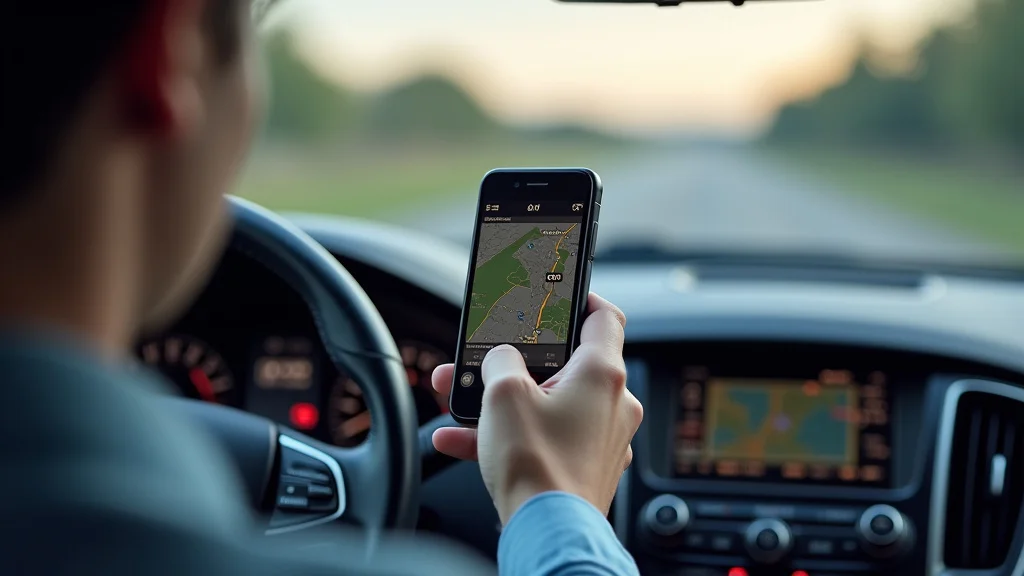
Remember that time you got hopelessly lost on a family road trip, relying on outdated paper maps and the questionable directions of a local stranger? Frustrating, right? Well, those days are pretty much over, thanks to the GPS navigation gadget. This piece explores everything you need to know about these helpful devices. You’ll learn how they work, the different types available, and how they can seriously improve your trips. Plus, we’ll bust some common myths. Prepare to transform your journeys into smooth, stress-free adventures. By the end, you’ll be equipped with the knowledge to select the perfect gadget and use it to your advantage, keeping you on the right track and saving time.
Key Takeaways
- Learn about the fundamental functionality of a GPS navigation gadget.
- Discover the various types of GPS devices available and their ideal uses.
- Explore the key features and characteristics that distinguish great gadgets.
- Gain insight into the benefits these devices offer for various activities.
- Understand the common challenges and their solutions.
- Make well-informed selections, improving your navigation.
Unveiling the Inner Workings of a GPS Navigation Gadget
The core function of a GPS navigation gadget rests on the Global Positioning System (GPS). GPS is a satellite-based system that allows devices to pinpoint their location on Earth. It operates through a network of satellites orbiting the planet, sending radio signals to receivers on the ground. These signals contain information about the satellite’s location and the precise time the signal was sent. Your gadget then uses this information to calculate the distance to each satellite. Because the signals travel at a known speed, it can determine how far away the satellites are. By triangulating the signals from multiple satellites, your gadget figures out its exact position—latitude, longitude, and even altitude—with remarkable accuracy.
The GPS Satellite Constellation
At the heart of any GPS system is a network of satellites. These satellites circle Earth, constantly transmitting signals that your gadget uses to determine its location. The United States maintains the original GPS constellation, but other countries have developed their own, such as GLONASS (Russia), Galileo (Europe), and BeiDou (China). These systems all work similarly. To get an accurate position, your gadget needs to receive signals from at least four satellites. The more satellites it can connect to, the more precise the location is. This network ensures that at least four satellites are ‘visible’ from almost any point on the planet at any given time. The strength and reliability of the signal can vary depending on location, weather, and obstructions, such as tall buildings or dense forests.
-
Satellite Coverage. The global coverage from GPS satellites ensures that a device can obtain positioning information virtually anywhere on Earth. This system is crucial for a wide variety of activities, from driving and hiking to aviation and shipping.
The location of satellites is constantly tracked and updated by ground stations to ensure precise positioning accuracy. These updates are essential to correct any orbital drifts and maintain the accuracy of the system.
-
Signal Transmission. Satellites send out radio signals to communicate with the GPS receivers. These signals contain important information like the satellite’s exact position, the current time, and other data needed for precise positioning. The signals travel at the speed of light.
Signal reception can be affected by interference from other radio sources or by obstructions such as mountains or buildings. The ability of a GPS receiver to handle these signal disruptions impacts its overall performance.
-
Signal Processing. Once your gadget receives signals from several satellites, it begins calculating the user’s exact position. This processing involves complex algorithms. Your gadget figures out the distance from each satellite. It uses these distances to determine its location.
The processing power of a GPS gadget directly affects how quickly and accurately it can determine a user’s position. This is especially important when moving fast. Quick processing prevents delays when updating the user’s position.
Key Components of a GPS Receiver
A GPS navigation gadget, like a smartphone or a dedicated device, is composed of several critical parts. These parts work together to receive, process, and display positioning data. The antenna is the gateway, capturing weak signals sent from the orbiting satellites. The receiver is the brain, handling the complex calculations necessary for determining your position. A built-in display provides a visual representation of the device’s location, maps, and directions. Finally, a power source, typically a battery, provides the energy to keep the system running.
-
Antenna. This component captures the radio signals from GPS satellites. It is the first point of contact for the signals. Different antenna designs exist to improve signal reception, especially in challenging environments like urban canyons or forested areas.
Antenna design is important for overall gadget performance. The antennas are optimized to receive the specific frequencies used by GPS satellites. The performance of the antenna has a direct impact on the gadget’s ability to maintain a strong lock on signals.
-
Receiver. This part is responsible for processing the signals captured by the antenna. Receivers use these signals to calculate the user’s exact location. The receivers have sophisticated software to filter out noise, correct errors, and decode the information from the satellites.
The efficiency of the receiver affects how quickly the gadget can find and maintain a fix on the GPS signal. New technologies and advanced chipsets enable fast and more accurate signal processing. Good receivers also handle environments with poor signal reception.
-
Display. The display is the user interface. It shows the user’s current location, maps, and directions. High-resolution displays improve usability, making it easier to read maps and follow directions. Displays may include touchscreen capabilities for user interaction.
Display quality, size, and brightness influence usability, especially outdoors. The display is the primary means of interacting with the gadget. Displays must be readable in bright sunlight and capable of showing detailed maps.
Choosing the Right GPS Navigation Gadget for You
Selecting the right GPS gadget hinges on understanding how you plan to use it. Consider what activities you do, the features you need, and your budget. Dedicated GPS devices, like those used in vehicles or for outdoor activities, generally offer greater accuracy, better durability, and features specialized for their purpose. Smartphone apps offer convenience. They often integrate with other apps and services, but they can be less accurate in certain situations, and the battery life might be a limiting factor. The ideal choice should align with your specific requirements.
Types of GPS Devices
Several types of GPS devices are available, each serving a particular purpose and user group. Vehicle navigation systems are the most common. These devices offer turn-by-turn directions, real-time traffic updates, and points of interest. Handheld GPS devices are essential for outdoor activities like hiking and geocaching. They are designed to withstand tough conditions and provide detailed maps. Wearable GPS trackers, such as smartwatches, track physical activity and monitor location. Each type offers its own set of advantages and is built with different features to cater to specific needs.
-
Vehicle Navigation Systems. These devices are usually mounted on the dashboard and provide turn-by-turn directions and other features. They offer features like lane guidance, real-time traffic updates, and voice prompts. The systems are designed for easy operation while driving.
These devices are great for frequent travelers. They help with navigation, allowing a driver to focus on the road. The ease of use and the ability to find routes quickly make vehicle navigation systems a must.
-
Handheld GPS Devices. These units are very useful for outdoor adventures. They are designed to be rugged and durable, with features designed for harsh environments. They include advanced mapping capabilities and detailed trail information.
These are built for adventurers, hikers, and anyone exploring the outdoors. They have long battery life and rugged designs. They give outdoor users a way to plan, track, and record their trips.
-
Wearable GPS Trackers. These devices are often found in smartwatches and fitness trackers. They track location and offer fitness metrics, such as steps and heart rate. They are perfect for runners and other people seeking to track their activities.
Wearable GPS trackers give users fitness and location information. They help users track activities, monitor health, and stay connected. The small size makes them convenient.
Key Features to Look For
When selecting a GPS gadget, several features should influence your choice. Accuracy is vital. A device that can accurately pinpoint your location is essential, especially when you are in the outdoors or need detailed directions. Battery life is another important aspect, particularly if you plan to use the gadget on long trips or adventures. Durability ensures that the gadget can withstand different conditions. Consider the features that cater to the specific environments and activities where you plan to use the device.
-
Accuracy. The degree to which a device can pinpoint a user’s location. Accurate devices provide precise positioning, essential for applications like hiking and outdoor navigation. Advanced devices use sophisticated technologies, such as multi-GNSS support.
Accuracy depends on factors, including the number of visible satellites and environmental interference. High-accuracy gadgets use technologies that minimize signal errors. Accuracy levels can vary between devices, so research is important.
-
Battery Life. This is the length of time the device can operate on a single charge. Longer battery life is important for extended trips, camping, or outdoor activities where charging isn’t readily available. Power-saving modes and efficient designs extend usage.
Battery performance impacts usability. Longer battery life gives more time for use without interruption. When buying, users should consider how they will charge it in the field.
-
Durability. The gadget’s ability to withstand harsh conditions, such as extreme temperatures, water, and shocks. Rugged designs are essential for outdoor activities. They ensure a longer lifespan, even with heavy use in challenging environments.
Durability affects the reliability and lifespan of the gadget. Durable gadgets handle rough use, providing peace of mind. Check the specifications for water resistance and construction.
GPS Navigation Gadget Benefits in Different Settings
The applications of a GPS navigation gadget span a wide array of activities, providing significant benefits in each context. In a vehicle, GPS provides real-time guidance, traffic updates, and the location of nearby services. For outdoor activities like hiking, the gadget supplies detailed maps, the ability to track your route, and a method of finding your way back. For business purposes, the gadget can be used for fleet management, to optimize logistics, and monitor the movement of resources. Ultimately, GPS gadgets are flexible and add substantial value across numerous needs.
Driving and Travel
For drivers, GPS gadgets make navigation easier and safer. They eliminate the need for paper maps and help drivers avoid getting lost. Real-time traffic data enables drivers to select the fastest routes, saving time and fuel. Features like lane guidance and voice prompts make driving less distracting. These devices enhance the overall travel experience.
-
Turn-by-Turn Directions. Provide clear, spoken directions. They guide drivers through routes and prevent them from missing turns. This feature reduces distractions, allowing drivers to focus on the road.
Turn-by-turn directions are a basic feature of almost all driving GPS gadgets. They are key to safe and easy navigation. The clarity of the instructions is critical to preventing mistakes.
-
Real-Time Traffic Updates. Provide information about traffic congestion, accidents, and road closures. They enable drivers to avoid delays by selecting alternate routes. Updated information helps drivers plan trips and reduces travel time.
Traffic updates are extremely valuable for making a trip faster. They are useful in areas that have heavy traffic. Traffic updates help to avoid delays.
-
Points of Interest. Help drivers find gas stations, restaurants, hotels, and other services. They provide detailed information about nearby services, including reviews and ratings. This feature makes it easy to find what is needed along a route.
The Points of Interest feature improves convenience. Drivers can find needed services. It helps drivers plan their trips efficiently.
Outdoor Adventures
For outdoor adventurers, a GPS gadget is a reliable companion. It offers detailed topographic maps, enables route tracking, and allows users to mark waypoints. Rugged designs and long battery life are essential in this environment. These features give outdoor enthusiasts confidence and safety, enabling them to explore remote areas. The information enhances their outdoor experience.
-
Detailed Mapping. Includes topographic maps that show terrain features, such as elevation, contours, and landmarks. This capability assists hikers with planning routes, assessing difficulty, and making sure they do not get lost. Detailed maps add another layer of safety and improve navigation.
The quality of the map data is essential for accurate navigation. Modern handheld units give detailed map views. Detailed map data helps hikers understand the terrain.
-
Route Tracking. Allows users to track their routes, record distances, and save their adventures. Tracked routes can be saved to a device. Route tracking is also useful for retracing steps. This feature helps with planning for future trips.
Route tracking offers the ability to track and analyze the user’s movement. Saved data is useful for reviewing a trip. It helps to improve skills and planning for future trips.
-
Waypoint Marking. Helps users save and identify significant locations like campsites, trailheads, or points of interest. These waypoints can be navigated to. The waypoint feature is useful for planning and navigating.
Waypoints are helpful for navigation and are used to add points of interest. It is a key tool in creating and following routes. Users can mark key locations. The feature is useful in the outdoors.
Business and Commercial Use
In the business world, GPS gadgets are essential tools for fleet management and logistics. GPS devices enable businesses to track vehicles, optimize routes, and improve efficiency. GPS gadgets provide data on vehicle location, speed, and fuel consumption. These devices help businesses save money, improve service, and maintain compliance with regulations.
| Application | Benefit | Impact |
|---|---|---|
| Fleet Management | Real-time vehicle tracking | Reduces fuel consumption and increases driver safety |
| Route Optimization | Selecting the most efficient routes | Reduces travel time, delivery times, and labor costs |
| Asset Tracking | Tracking mobile assets | Improves efficiency and safeguards against theft |
Common Myths Debunked
Myth 1: GPS Gadgets Always Work Perfectly
While GPS navigation gadgets are typically reliable, their performance can be affected by various factors. GPS signals sometimes have interference. The accuracy and the speed of signal acquisition can be reduced in urban canyons, dense forests, or indoors. Weather conditions can also affect GPS signal reception, leading to temporary inaccuracies. So, while GPS is generally dependable, it’s not infallible.
Myth 2: GPS Is Only For Finding Directions
Many believe that GPS gadgets are simply for finding directions. However, these devices can do so much more. They are packed with features. They track activities, measure speed and distance, record elevation, and even display weather information. The range of functions makes GPS gadgets valuable tools. They are used by people for travel, outdoor activities, and business operations. The range of applications shows the technology’s overall usefulness.
Myth 3: All GPS Devices Consume the Same Amount of Battery
The assumption that all GPS devices consume the same amount of battery power is incorrect. The battery consumption varies greatly depending on several factors. The device’s model and its features influence power use. Some gadgets have energy-saving modes. The amount of time spent searching for a signal also influences power usage. Therefore, choosing a gadget with good battery life is essential. This ensures the device’s reliability on long trips.
Myth 4: GPS Only Works in Areas With Cell Service
A common myth is that a GPS gadget needs a cellular signal to operate. In reality, GPS uses signals from satellites. These signals are separate from cell phone networks. GPS gadgets work well in remote locations with no cell service. Some devices integrate cell service to provide extra features, such as map downloads and real-time traffic updates. The basic GPS functionality, however, does not require a cellular connection.
Myth 5: All GPS Devices Are Equally Accurate
Not all GPS navigation gadgets are equally accurate. The accuracy of a device is determined by factors like the quality of the receiver, the number of satellites it can use, and environmental conditions. Higher-end devices frequently incorporate multi-GNSS support. They can access different satellite systems. These models provide more reliable and precise positioning. The overall precision varies between devices. Users need to consider their needs when selecting a device.
Frequently Asked Questions
Question: How often do GPS satellites update their positions?
Answer: GPS satellites continuously broadcast their orbital data. This information is updated regularly by ground stations to ensure precise positioning.
Question: Can GPS gadgets work indoors?
Answer: Generally, GPS signals struggle to penetrate buildings. The devices typically work better outdoors.
Question: What’s the difference between GPS and a GPS tracker?
Answer: A GPS gadget is for finding your location. A GPS tracker broadcasts the user’s location to others.
Question: How do I improve GPS signal reception?
Answer: Ensure that your gadget has a clear view of the sky. Avoid obstructions like buildings or trees.
Question: Do GPS gadgets require a subscription?
Answer: Most GPS gadgets don’t require a subscription for basic navigation. However, some advanced features might require one.
Final Thoughts
From helping you find your way on a road trip to guiding your adventures in the wilderness, the GPS navigation gadget has become a must-have tool. These devices provide accurate positioning. They enhance mobility. They save time and decrease stress during your journeys. The technology provides key benefits. As you explore the market for the right device, consider the options. Consider the features. Choose one that matches your activities and your budget. With a reliable GPS gadget by your side, you will explore new places with confidence. Stay on course, and make every trip an experience to remember.


