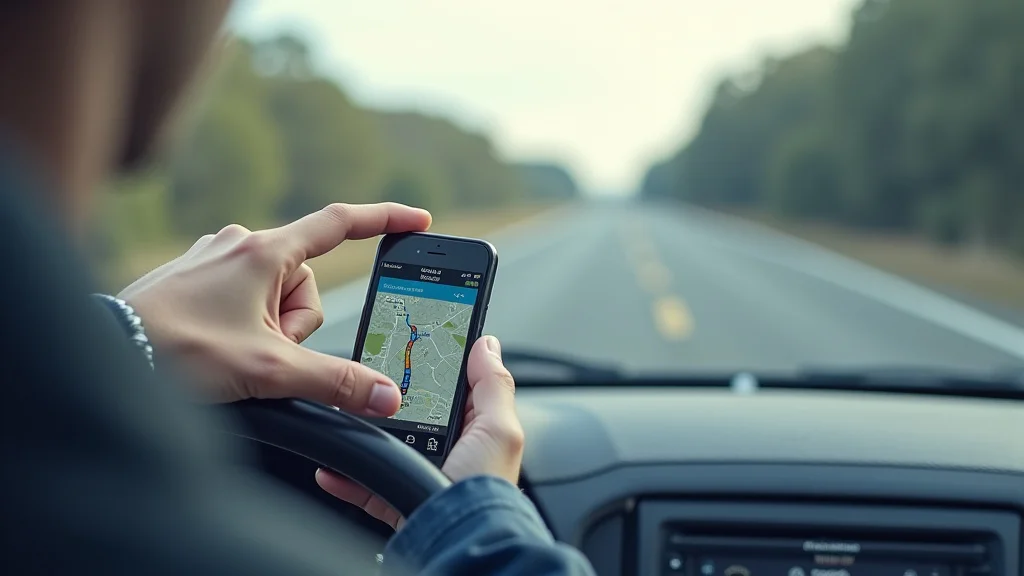
Remember that time you were hopelessly lost in a new city, squinting at a crumpled paper map? Thankfully, those days are largely gone. Today, we rely on the convenience of google maps gps navigation to get us where we need to go. From finding the shortest route to discovering hidden gems, the app has become an indispensable tool for travelers and everyday commuters. This guide will explore the ins and outs of google maps gps navigation. You’ll gain a deeper appreciation for its features, learn tips and tricks to optimize your experience, and become a more confident user. This post will improve your knowledge and navigation skills.
Key Takeaways
- Explore the core functionalities of Google Maps GPS navigation, from route planning to real-time traffic updates.
- Discover how to personalize your settings and preferences for a seamless navigation experience.
- Learn advanced features, including offline maps and voice guidance customization.
- Uncover common challenges users face and how to troubleshoot them effectively.
- Explore tips to conserve battery life while using Google Maps for extended trips.
- Gain a better grasp of the technology that powers your route planning.
Understanding Google Maps GPS Navigation Fundamentals
Google Maps has evolved from a simple mapping application to a comprehensive navigation tool. At its core, the app uses GPS (Global Positioning System) technology to pinpoint your location on Earth. GPS relies on a network of satellites orbiting the planet, sending signals to your device. Google Maps interprets these signals to calculate your precise position, allowing it to display your location on a map and track your movement in real-time. This real-time tracking is a core element in planning your route. The application overlays this data with map information, showing streets, points of interest, and other relevant details. It analyzes this data to provide driving directions, walking directions, public transportation options, and even cycling routes, depending on the availability in your location.
Core Components of Google Maps Navigation
- Route Planning: The ability to input a destination and receive directions, considering factors like distance, traffic, and road conditions. This is the starting point for any trip.
- Real-Time Traffic Updates: Google Maps gathers traffic data from various sources, including user data and sensors, to provide up-to-the-minute information on traffic flow, congestion, and incidents.
- Turn-by-Turn Directions: The app provides voice-guided and visual instructions to guide you along your chosen route, displaying lane guidance and upcoming turns.
- Search Functionality: Integration with Google’s search engine allows users to find places, businesses, and points of interest along their route.
- Offline Maps: The ability to download map data for offline use, helpful in areas with limited or no internet connectivity.
Google Maps leverages its vast database of map data, user contributions, and real-time information to provide a sophisticated navigation experience. The accuracy of GPS location data is constantly improved, and the routing algorithms are updated to provide the most optimal paths based on current conditions. The app’s success is based on its accuracy and ease of use, with improvements added continuously.
GPS Technology and Data Integration
The foundation of google maps gps navigation rests on the GPS technology. The system uses a network of satellites that transmit signals containing their precise location and the current time. Your device’s GPS receiver picks up signals from multiple satellites. It uses the time it took the signals to reach your device to compute the distance to each satellite. By knowing the distances to at least four satellites, the receiver can calculate your exact location (latitude, longitude, and altitude). Google Maps combines this location data with mapping data, which includes information on roads, buildings, and points of interest. It then integrates real-time information, such as traffic updates and road closures. This real-time data comes from various sources, including user contributions, government agencies, and sensors embedded in the road.
For example, if a car equipped with GPS is traveling on a road, Google Maps can detect its speed and direction. By collecting data from a large number of vehicles, the system can estimate traffic flow on different roads. This data integration allows Google Maps to provide users with accurate and up-to-date directions. The system also learns from users’ behaviors. When many users take a particular route, the system may prioritize that route in the future. Over time, the system becomes more efficient in delivering route suggestions.
Google Maps Interface and User Experience
Google Maps features an intuitive and user-friendly interface. The map itself is the central element, displaying your current location, the route to your destination, and surrounding points of interest. You can zoom in and out, pan across the map, and explore your surroundings with ease. The interface is designed to provide you with relevant information at a glance. Visual cues, such as colored lines to indicate traffic conditions and clear icons, are used to make it easy to follow directions and understand your route.
- Search Bar: Allows you to enter destinations, explore points of interest, and search for specific locations.
- Navigation Bar: Located at the bottom, this bar provides access to navigation, directions, and explore features.
- Layers: You can add layers to the map to display traffic, public transit, satellite imagery, and other information.
- Voice Guidance: Clear and easy-to-understand voice prompts guide you throughout your journey.
The app offers customizable settings, allowing you to tailor your experience. For example, you can choose your preferred method of transportation, select voice preferences, and adjust map display options. The design ensures a positive user experience. The app’s layout is optimized for both visual clarity and ease of use, making navigation an effortless process. This intuitive design, along with regular updates, has made Google Maps the preferred navigation app for users worldwide.
Advanced Features and Customization of Google Maps
Beyond the basics, google maps gps navigation offers an array of advanced features that can enhance your experience. These features provide more control and customization options. For example, you can create and save custom routes, download maps for offline use, and personalize your settings to fit your needs. These additions enhance efficiency. Advanced features allow the user to have a more customized and enhanced experience.
Personalizing Your Navigation Settings
- Choosing Preferred Transportation: Set your default mode of transportation (driving, walking, cycling, or public transit) to prioritize routes that are most relevant to you.
- Voice Guidance Customization: Adjust the voice volume, select your preferred voice, and choose whether to receive spoken street names.
- Route Options: Select route preferences such as avoiding tolls, highways, or ferries, and enable features like calculating routes for electric vehicles.
- Map Display Customization: Change the map view (e.g., 2D or 3D), adjust color schemes, and enable/disable traffic and other map layers.
- Unit Preferences: Choose between metric or imperial units for distance and speed.
Customizing your navigation settings ensures a seamless and personalized experience. By selecting your preferred mode of transportation, you can ensure that Google Maps provides routes that align with your needs. Customizing voice guidance helps you to stay informed. Adjusting the map display to show the information most relevant to you is a key element in effective navigation. These customization features can enhance your overall navigation experience.
Offline Maps and Data Saving Techniques
One of the most valuable features of Google Maps is the ability to download maps for offline use. This is particularly helpful when traveling in areas with limited or no internet connectivity. By downloading maps beforehand, you can still access directions, search for places, and view map data even without an active internet connection. This feature reduces data usage. This is a game-changer for travelers. Offline maps allow you to maintain your location, even when there’s no internet available.
- Downloading Maps: Search for the location you want to download. Tap the three dots (.) and choose “Download offline map.” Select the area you want to save.
- Managing Offline Maps: View, update, or delete downloaded maps in the offline maps section of the Google Maps menu.
- Data Saving Tips: Disable automatic updates for offline maps, use Wi-Fi to download maps, and avoid downloading large areas unless necessary.
- Use of Data Saver Mode: Enabling data saver mode can further reduce data consumption.
The ability to download offline maps has a significant impact on your travels. You can always access your maps, even if you are out of range of a cellular signal or Wi-Fi. It helps save data, allowing you to focus on the journey itself. Downloading maps for offline use provides a layer of security, allowing you to stay connected and informed during your travels.
Exploration of Route Options and Alternatives
Google Maps gives several route options, allowing users to select the path that best suits their needs. In addition to providing the most direct route, the app provides alternative routes. This allows you to compare travel times, distances, and traffic conditions. You can choose the route that offers the best balance of speed and convenience. Google Maps incorporates real-time traffic data, which allows it to suggest alternative routes when delays arise. The app monitors traffic patterns to ensure accurate suggestions.
- Multiple Route Options: When planning a route, the app often suggests several different options. Each option displays estimated travel time, distance, and traffic conditions.
- Traffic-Aware Routing: If there is traffic on your chosen route, Google Maps will provide alternative routes. These are based on real-time traffic data, avoiding congestion.
- Detour Planning: If there’s an incident, such as a road closure or an accident, Google Maps will automatically reroute you around the affected area.
- Avoid Tolls and Ferries: You can set preferences to avoid toll roads and ferries, tailoring your route to your needs.
- Public Transportation Options: For public transport, you can explore various route options. This information includes estimated travel times, platform numbers, and transfer information.
Google Maps gives you control over your route planning. It gives you the flexibility to choose the best path for your journey. Having these tools allows users to customize their travel experience. This allows you to plan your trips in the best way possible.
Troubleshooting Common Google Maps Issues
While google maps gps navigation is generally reliable, you might encounter issues. Fortunately, most problems are easily resolved. Troubleshooting common issues, such as inaccurate location data and connectivity problems, ensures smooth navigation. Understanding the reasons behind the issues will help you resolve them quickly. Addressing these issues can save time and frustration.
Addressing Location Accuracy Problems
- Poor GPS Signal: GPS signals can be affected by obstructions, such as tall buildings, tunnels, and dense tree cover. Make sure you have a clear view of the sky.
- Location Services Settings: Check that location services are enabled for Google Maps in your device’s settings. Ensure that the app has the permission to access your location.
- Calibration: Calibrate your device’s compass and GPS. Walk around in a figure-eight pattern to recalibrate the device.
- Software Updates: Keep your device’s operating system and the Google Maps app up-to-date.
- Restart the App and Device: Close the Google Maps app and restart your device. Then, reopen the app and try again.
Inaccurate location data can disrupt your journey. Ensuring that location services are enabled and that your device has access to a clear view of the sky is important. Calibration is also important to maintain the accuracy of your location. Updating software helps improve performance.
Resolving Connectivity and Data Usage Problems
- Check Internet Connection: Ensure your device has an active internet connection. Check the settings and confirm you are connected to Wi-Fi.
- Data Usage Settings: Check the Google Maps data usage settings. Set limits for background data usage if necessary.
- Offline Maps: Download maps for offline use in areas with poor or no internet connectivity.
- Clear Cache and Data: Clearing the app’s cache can resolve connectivity issues. In your device’s settings, locate the app’s cache and data settings.
- Update the App: Make sure you have the latest version of the Google Maps app installed.
Connectivity issues can happen when using Google Maps. You can check your internet connection, adjust your data settings, and clear your cache. You can also download offline maps. These actions can fix most connectivity issues. Keeping the app updated ensures that you will have the latest features and bug fixes.
Dealing With App Glitches and Errors
Occasionally, you might encounter app glitches or errors. These can manifest as incorrect directions, map display issues, or the app crashing. It’s important to know the steps you can take to address these problems. Knowing how to deal with these common issues can make your experience with Google Maps better.
- Restart the App: Close the Google Maps app and reopen it. This can often resolve temporary glitches.
- Restart the Device: Restarting your device can clear up temporary system errors that might affect the app.
- Clear Cache and Data: Clearing the app’s cache and data can help to resolve issues.
- Reinstall the App: If problems persist, consider uninstalling and reinstalling the app.
- Report the Issue: If you find a persistent glitch, report the issue to Google through the app’s feedback option.
App glitches and errors can disrupt your navigation. Restarting the app or your device can resolve temporary problems. Clearing the cache and data will solve issues related to corruption. Reinstalling the app may be required if other methods do not resolve issues. Reporting problems provides feedback that can improve the performance of Google Maps.
Conserving Battery Life While Using Google Maps
Using google maps gps navigation, especially for extended periods, can drain your device’s battery quickly. Knowing how to conserve battery life will ensure you stay connected. These techniques will extend the time you can use Google Maps. Implementing these steps will help you maximize your time.
Optimizing Your Device’s Settings for Battery Efficiency
- Dim the Screen: Reduce your screen brightness. This is a significant drain on battery life.
- Turn Off Unnecessary Features: Disable Bluetooth, Wi-Fi, and other features you are not using.
- Location Services: Set location services to “High accuracy” only when using Google Maps.
- Power Saving Mode: Enable your device’s power-saving mode to limit background activity and optimize performance.
- Background App Refresh: Turn off background app refresh for apps you don’t use frequently.
Battery drain is a common concern when using navigation apps. Dimming the screen, turning off unnecessary features, and using power-saving mode can extend your battery life. This allows you to use the app for a longer time before recharging. These settings will also increase the performance of your device.
Tips for Reducing Data and Resource Usage
- Use Offline Maps: Download map data for offline use. This reduces the need to download data.
- Minimize App Background Activity: Close other apps you are not using.
- Reduce Map Zoom: Maintain a moderate zoom level. Excessive zooming can consume resources.
- Limit Real-Time Features: Disable traffic overlays or other real-time features if not needed.
- External Power Source: Use a car charger or portable power bank for longer trips.
Using offline maps can significantly reduce data usage and conserve battery life. By minimizing background activity and limiting real-time features, you can conserve your battery. Using a power source can make it easier to power the device. Knowing how to optimize your device’s settings will ensure that you have battery life available.
Common Myths Debunked
Myth 1: Google Maps Always Provides the Fastest Route
Many users assume Google Maps always provides the absolute fastest route. The reality is that the app considers multiple factors, including distance, traffic, and road conditions, but it might not always select the absolute quickest path. The app provides a route, but it may also consider user preferences, road conditions, and how fast the route is for the user. Google Maps also considers other factors when planning a trip.
Myth 2: Google Maps Uses Real-Time Data From All Drivers
While Google Maps uses data from drivers, it does not get all its data from the drivers. The app gets its data from a variety of sources. These sources include anonymized data from users who have location services turned on, traffic sensors, and government agencies. This information is used to show traffic and route users. This ensures greater accuracy and makes sure there is reliable data.
Myth 3: Using Google Maps Requires a Constant Internet Connection
You don’t need to be always connected to the internet to use Google Maps. The app allows you to download map data for offline use. This allows you to explore maps and receive directions, even without an active internet connection. You can search for locations and get directions even if you don’t have a data connection.
Myth 4: Google Maps is Always Accurate for Public Transit
Google Maps is mostly accurate for public transit, but not always. The accuracy of the public transport data depends on the data it receives from local transit agencies. Disruptions and delays may not always be reflected in the app. Always double-check information with transit operators.
Myth 5: Google Maps Drains Your Phone’s Battery Quickly
Google Maps can drain your phone’s battery. This can be reduced by using the correct settings on your device. Turning down your screen brightness, disabling features like Bluetooth, and using power-saving mode can help conserve battery life. Downloading offline maps also minimizes battery drain. Google also gives the user options to extend their battery life.
Frequently Asked Questions
Question: Can I use Google Maps without a data plan?
Answer: Yes, you can use Google Maps without a data plan by downloading maps for offline use.
Question: Does Google Maps track my location?
Answer: Yes, Google Maps tracks your location while the app is in use to provide navigation and other location-based services.
Question: How accurate is Google Maps’ estimated time of arrival?
Answer: Google Maps’ estimated time of arrival is generally accurate, but it depends on traffic conditions and other factors.
Question: Can I use Google Maps on my smartwatch?
Answer: Yes, you can use Google Maps on many smartwatches that have GPS and internet connectivity.
Question: How do I report a problem with Google Maps?
Answer: You can report a problem by tapping on the menu, selecting “Send feedback”, and providing details about the issue.
Final Thoughts
Google Maps gps navigation has become an essential tool for people around the world. It provides users with reliable route planning. Its user-friendly interface and advanced features are widely appreciated. From route guidance to real-time traffic updates, Google Maps empowers people to explore and navigate the world. By exploring the core functionalities, such as route planning and real-time traffic updates, you can explore the app’s features. This will provide you with a deeper appreciation of the technology. Knowing how to troubleshoot and address problems, from location accuracy to connectivity, is critical. Being able to adapt and refine your settings provides you with a much better experience. These are the key elements to being able to get the most out of Google Maps. By following the tips and techniques mentioned here, you can navigate your surroundings effectively. Start by exploring the different features, such as offline maps, and adapt your settings for the best user experience.


